Posts

Showing posts with the label Practice

Automatic Piano Practice
Image
I had planned to present a session at the KMTA Conference this past weekend, (Covid threw a wrench in that plan, so I'll be trying again next year), but my topic was 'Business Strategies for Independent Music Teachers'. Presenting like this is a new opportunity for me, and a way to grow in my profession. But working on this presentation has got me thinking a lot about automation, because it just so happens to be one of the best tools for surviving as an entrepreneur. The more you can automate, the less you have to spend valuable time manually doing tasks, and the more you have time for doing the parts of your job that you love.  And thinking on this topic has also got me thinking about how automation could be useful for piano students. Especially when it comes to building a practice habit. How can we take advantage of automation to support home practice?  Here are a few ideas off the top of my head:  Automatic reminders - setting an automatic alert or calendar reminder fo...
Podcast Chat on Finger Numbers

Image
I have long been a supporter, occasional guest, and regular behind-the-scenes contributor to the P iano Parent Podcast for several years now. And over that time I've shared many of my favorite episodes right here on the blog because I think it is a truly valuable resource for parents of piano students. So while I was meeting with Shelly, the podcast's host, to brainstorm ideas for the upcoming quarter, she invited me to record a quick teacher chat episode with her all about finger numbers and hand placement.  If you've ever wondered w hy we bother about finger numbers, h ow important they are really, or w hat the long term goal in prescribing finger numbers and hand placement in early music might be, then this episode is a worthwhile listen. Shelly & I both share our thoughts on hand placement, how we handle certain challenges in our teaching, and most importantly we have a few simple tips to help piano parents support learning good finger habits in home practice.  I in...

Piano Maestro

Image
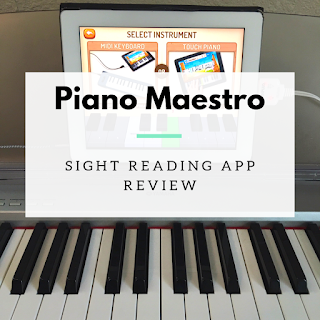
Since I am in prep week between the summer and school year sessions, this post is all about how you can prep at home by setting up Piano Maestro, AND how we can use it to encourage practice by enabling the Home Practice challenge. I've had several parents recently ask me about the piano lab set up after watching their kids sit down and be self-motivated to sight read music using the Piano Maestro app. And that's because this app uses the best parts of gaming technology & the psychology of gamification to create an environment where piano students are learning new notes and technic while actively sight reading and practicing on their actual piano (not just interacting with the screen). All the while, they are receiving in-game rewards and milestones that keep them excited to work for excellence and to progress forward. What you need: A piano (acoustic or digital both work) and an iPad. First step: let me know that you'd like to try Piano Maestro at home and I w...

Why do we Apologize for 'Wrong' Notes?

Image
It happens to all of us, we hit a wrong note and out slips an "oops, sorry!" as we play on. I know I'm guilty of this, particularly when playing a duet or accompaniment, and I hear students apologizing *all the time* in lessons for missed or wrong notes.  So why do we do this? My feeling is that this tendency points to an underlying fear of making mistakes, or of letting our teacher or fellow musicians down. In today's post, I'd like to offer some alternatives to apologizing and try to reshape some of our thinking around those inevitable hiccups.  You may be familiar with the Bob Ross quote pictured here, or at least have seen it floating around the internet. I know I've seen this 'happy little accidents' thinking applied to all sorts of life situations. And I do think that this can be really beneficial thinking for artists & musicians.  So what can we do when we make a mistake instead of apologizing? 'Jazz it Up' This is the mus...

Sight Reading 101: Support for Home Practice

Image
To wrap up this month's blog series all about sight reading, I'm sharing some easy-to-implement ways to support your piano kid in building this essential musicianship skill during home practice time. The best thing you can do is to simply make sight reading a regular part of home practice. This doesn't have to take more than a minute or two each practice, and is as simple as getting your student to look at notes in a new order and play them. Doing this regularly will build into a confident sight reading ability.  Daily Sight Reading Exercises Apps are my personal favorite because they gamify the sight reading process for students. And the best part about all of the examples below is that they use the mic on your phone or tablet so your student can practice sight reading on your piano, not just a screen. Piano Maestro - this one is the star of the piano lab at the studio! A very robust app that introduces new notes & technics with tutorial videos, then students...

Stage Fright - tips from Jenny Leigh Hodgins

Image
Most everybody experiences some level of stage fright when preparing to perform for an audience, audition, or examiner. And it's completely understandable, we are showcasing something that we've put a lot of preparation into, and we want our performance to reflect our hard work, to show what we're capable of, and to bring our audience enjoyment. But what can we do when the nerves start to take over? Today I'm sharing some tips from fellow music blogger, Jenny Leigh Hodgins' site all about turning those nerves into a positive performance energy. Hodgins shares 4 big tips for nervous performers (plus a couple bonus ones at the end) and I hope you'll find them as useful as I did. With the KMTA Progressions & our studio Spring Recital just around the corner, I think these will definitely come in handy in the coming months! 1. " get as many performing opportunities as possible and frequently !" This is absolutely the number one way to become ...

Listening

Image
This may date me a little bit, but when I was a kid, I think starting around age 5, I had tape player that I put right next to my bed, and I started collecting different tapes, often mix tapes (read: playlists) that my mom, uncle or grandpa had made for me. Whenever I was hanging out in my room and it felt too quiet, I would hit play on whatever my favorite at the time was. One aspect of music learning that can easily be overlooked between getting through songs in lessons & practice time at home is listening. Listening to music often can go a very long way to help train a young musician's ear for music making. Today's post is all about reminding us to expose piano kids to music on a regular basis. How does music listening really help?  Exposure to new music & genres . If we listen to a broad spectrum of music, we learn the styles, rhythms, and sounds of different types of music in an organic way. This makes it easier to reproduce them later on. Listening to dif...

Practice Tips & Tricks: Visualization

Image
My final practice trick for you this month is visualization. If you've played sports or done other competitive activities, you may have heard of this before as a training technic. And it does work in practicing your instrument as well. If you follow the blog regularly, you may have caught my book review of This is Your Brain on Music by Daniel Levitin last month. In reading it I learned that when we imagine doing something, the same portions of our brains fire up as though we were actually doing it. This is why visualization actually can work.  When I am using visualization to practice a piece of music, I like to have the sheet music in front of me and I read along at the performance tempo, and mentally 'play' the piece. I know which fingers fall on each note, I hear the piece in my head, I know which parts get louder or softer. I rehearse all the elements minus actually playing it on a piano. Some variations to make this do-able for beginning students: Your piano k...

Practice Tips & Tricks: Backing Tracks

Image
Backing tracks are my favorite new practice tool! I'd been using them a little bit for the past couple years, but after moving & transitioning to lots of online lessons where playing in-person duets is not as feasible anymore, backing tracks have taken center stage. And after implementing them so successfully with online students, I've also started using them more with my in-studio students too! So what is a backing track?  A backing track is a recorded accompaniment that your piano student plays their piece along with. It can either be a piano duet part or a full band accompaniment. If there are backing tracks for your music, I will bring them to your attention so you can arrange to have access to them at home.  And how do we use them?  Start by listening . If your piano kid hasn't heard the backing track yet, listen to it first. When available, listen to the version with the melody included, so your piano kid can hear their part & how it fits with the a...

Practice Tips & Tricks: Metronome

Image
Before you groan & go back to browsing Facebook or checking your email, hear me out. Metronomes don't have to be drudgery. They don't have to make your piano kid rage-y. They can be do-able, and they are definitely effective for those of us who struggle with pacing (sometimes this is me too, y'all). If you've had metronome related meltdowns, I know you're probably reading along and feeling pretty skeptical that this might actually work with your kid, but metronomes have seen some fun developments in recent years that make them a little more kid-friendly, a maybe even a little more hip.  So first up, let me tell you about some of my favorite metronome app:  Super Metronome Groove Box Available on iTunes & Amazon for Android .  If you want something that's going to give you fun drum beats to play along with, this is the app you want. It's not free, but it does have a lite version you can download to try out. The full version has LOTS of beat ...

Practice Tips & Tricks: Games!

Image
Happy New Year! We know the new year is a great time to get a fresh start & form some new habits. So to kick off 2019, I'll be sharing a series of blog posts all about my favorite practice tools & tricks complete with tips for how to help you use them at home! Teachers & parents alike, we all know that piano practice is necessary, and sometimes the discipline to keep it going can be tricky. But many of the tools that us teachers use in lessons to make things engaging & interesting can be adapted for easy use at home so your piano kid is digging into their music in new & fun ways. This helps piano students to grow into well-rounded musicians because they develop a whole toolkit full of ways to engage with and make music. To kick off this series, I'm going to talk about games. Gamification is an incredibly effective learning tool. Did you know that on average it takes 400 repetitions for the human brain to create a new neural pathway? BUT if we're havi...

Including a Piano Performance in Your Holiday Gathering

Image
Christmas is less than a month away already, and that means this next month will be filled with parties, dinners & gatherings. These can be an excellent time for your piano kid to share some music with friends & family. Today I've got 5 tips to make this an experience that entertains your guests while building the confidence of your piano kid.  1. Have fun! - Let this be lighthearted and celebratory. Whether you're all sitting quietly to listen to the music, or they are playing background music to your family meal or time together, let the spirit in the room be fun, lighthearted, & filled with encouragement. 2. Make it rewarding - Applaud when they are done, and give them lots of hugs, love and appreciation when they've finished. Want to make it a bit more rewarding? Put out a tip jar and let family members who appreciate the performance drop in pieces of candy, small toys or some cash/coins that your child can enjoy when their performance is finished. M...

20 Piece Practice Challenge - Free Printable!

Image
I am so excited to dive into the '18-'19 school year starting next week. And one way we'll make it fun heading into the fall is with a practice challenge.  Last year was my first year trying out a studio-wide practice challenge, and I loved the energy and motivation that it brought to my piano students throughout the year. Even my most reluctant practicers had spurts where they were goal-driven and focused on working pieces to completion. So I'm doing it again this year!  Now, I know that the studio is just starting back up, and I'm trying not to be too overzealous. So here's my challenge to each of this year's students:  Learn 20 pieces by the end of the term on April 26th. And that's it. Now I know the first question my students will ask when I introduce this to them is "what do I get if I do it?"  Well, I have answers.  If you complete your 20 piece challenge, you will get: A certificate of achievement presented to you on-stag...

Summer Bridge - Music Appreciation Videos

Image
Hello all! I hope you're enjoying this month's resources for staying engaged with your music education over the summer months. Today I'm sharing another Youtube playlist that discusses things you may not always encounter in every piano lesson. The videos discuss a broad range of music history, terminology & concepts, and definitely have something to offer to older students. You can learn what classifies one piece of music as an Aria? or a Fugue? A Gregorian Chant? Or you can delve into some music history & learn about the classical periods, or watch some composer bios from Bach & Mozart to John Williams. It is a widely varied playlist that I'd recommend for intermediate students who are ready for something beyond keyboard basics, and can start to see how what they are learning in lessons will plug them into the larger musical community. You can watch the first video below to find out what and Aria is, or scroll through the playlist to something that ca...

Summer Bridge - Intro to Classical Music App

Image
This app has been in use in my studio for the past several years, and it is such a well-formatted, intuitive introduction to music appreciation & classical music history, that I think it would make a perfect summer bridge activity to keep your elementary piano student engaging with music in new ways over the summer months.  So, the app works like an animated book with a chapter on selected classical composers, another on the parts of the orchestra & instrument families, and a third on what music is & where you can find it out in the real world. Every page is interactive with illustrations, and text that you can tap to be read aloud, and recordings of the discussed music. This makes for a great format for young students to read on their own. And they can choose navigate through it in order, or pick & choose where to go next from the home page.  The app is available on both iTunes & Google Play for a very reasonable price (compare to the price of a ha...

Summer Bridge - The Music Show

Image
Reviewing what we've learned is so important for young musicians. And summertime provides the perfect opportunity to pull out your favorite pieces & reinforce what you learned the past year.  This week I'm sharing a short Youtube series that covers some music theory basics for young music students. The episodes are short, the characters are goofy, and the videos do some great reinforcing of musical concepts like beat, rhythm, rests, high pitch vs low pitch, line & space notes etc.  There are only 6 episodes so this is a great show to watch a quick episode each day while on a vacation, and if you've got the time, maybe have a quick discussion about what the video is covering with your piano kid. That way, they can pick up right where they left off in the fall. You can watch the first episode below, or check out the whole playlist here: The Music Show on Youtube   And stay tuned next week for one of my favorite apps for young piano students to get...

Practice Challenges - In Review

Image
It seems like we just launched our practice challenges in the fall, and already our studio year is wrapping up as we move towards recital season in the Spring! I applaud every one of my students who signed up for a practice challenge, and learned lessons in time management, consistency and perseverance. And I'll bet you noticed that when you were able to stick to a practice plan, you saw real growth and improvement. The saying goes: Practice makes progress , and we definitely proved that this year. Now, I wasn't just sitting on the sidelines cheering, I did the 100 day challenge too. Let me tell you, some days it was not easy, and there may have been a few midnight practice sessions just so I wouldn't have to start over. But I set myself the challenge too because I felt it was really important to share in this experience alongside my students. So here's how it went so far! [insert drumroll] In the 100 day challenge, congratulations to: Tyler D. Addyson D.  ...

5 Ways to Practice Effectively

Image
I think when people envision piano practice, they see you sitting down and playing through pieces beginning to end. It's a completely understandable assumption, and this is also what our students think until we teach them otherwise. The reality is that a good, effective & dedicated practice has a lot of work that isn't just playing through pieces. So the third post of the Ship Shape Pianist series gives you 5 tips to making your practice more effective for 2018. If you want to see some real progress in your playing, try implementing these. If you aren't sure what resources to use for any of these, just ask your teacher what they'd recommend. 1. Scales & Technic: Warm up your fingers & your brain with some scales & arpeggios. Practice them at different tempos from slow & deliberate to very quickly. Play them legato & staccato, or try a swing or drop-roll pattern. Work on finger placement & thinking ahead to eliminate any pausing. Then tr...

4 Ideas for Scheduling Practice Time

Image
Ever had an entire week go by, remember it's piano lesson day, and then with horror realize you haven't opened a single piano book since the last lesson? You're not alone, so in our second post of the Ship Shape Pianist series, I'm sharing 4 tips to help you schedule piano practice and stick to it. 1. Schedule a set time. Consistent practices throughout the week are much more effective than a binge practice every so often. Sit down, look at your weekly schedule, and set a regular time that piano practice will happen, even if all you can comfortably manage is a 10-15 min window a few days a week. Then stick to it.    2. Set reminders. Whatever system you use for keeping your piano kids on a schedule, add piano practice to it. If you use physical planners, add piano practice at your chosen time. If using a digital calendar, set alerts or reminders. Or, if you need to practice after brushing teeth, put a "Practice Piano!" sticky note on the bathroom mirror...